Crossing the Line
My ancestors all arrived in Australia via ship in the 19th Century. Long sea voyages from England, Ireland and Scotland lasted up to 120 days, carrying them halfway around the world to an uncertain future. Imagine the hardship these people would have endured, living in cramped quarters in steerage, spending long periods below decks in stormy weather.
Storms were only one of the challenges. Ships also faced periods of complete calm when they were trapped in the doldrums, sometimes for weeks on end. Sails hung limp, with no relief from the hot tropical temperatures. For families accustomed to the cool climates of England, Ireland and Scotland, the conditions must have been almost unbearable.
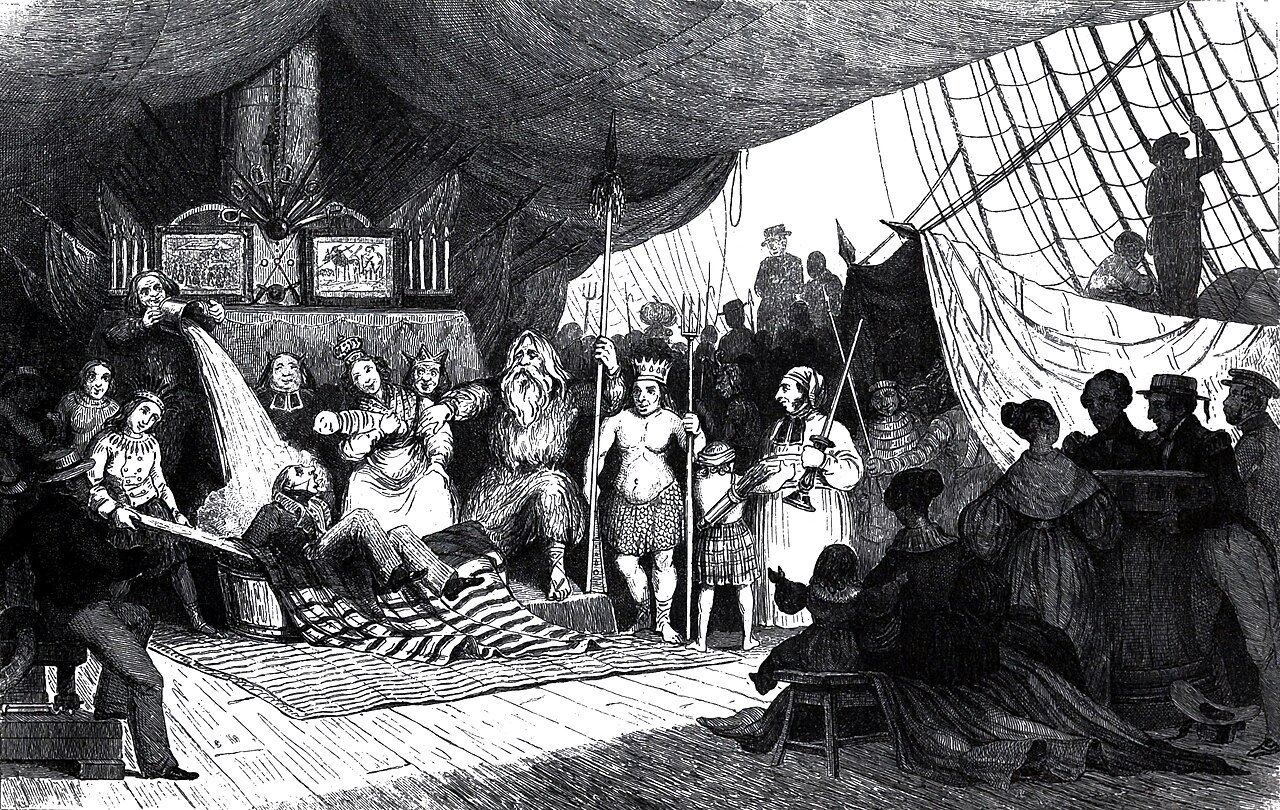
One welcome distraction from the monotony was the traditional ‘Crossing the Line’ ceremony when the ship crossed the equator. Any of the crew, and sometimes the passengers, who had never crossed before were subjected to this initiation. The Captain or a senior crew member would impersonate King Neptune, complete with makeshift crown and trident, while experienced shellbacks became his court. The Pollywogs, as those who had not previously crossed the equator were called, were then put through a series of comic and sometimes rather unpleasant tests before earning their place among the Shellbacks.
What surprised me most was discovering that this centuries-old tradition has never completely disappeared. Although modern ceremonies are generally more restrained, many naval vessels and some merchant ships still mark their first crossing of the equator with a version of King Neptune's court. It's remarkable to think that a ritual my ancestors may have witnessed more than 150 years ago continues to connect sailors across generations.